(208) 915-8400 john@redcedarwealth.com
Est. 2001 · Co-Founder, Red Cedar Wealth Advisors

Twenty-five years of watching cycles. Specialized advisory work for households at an inflection point.

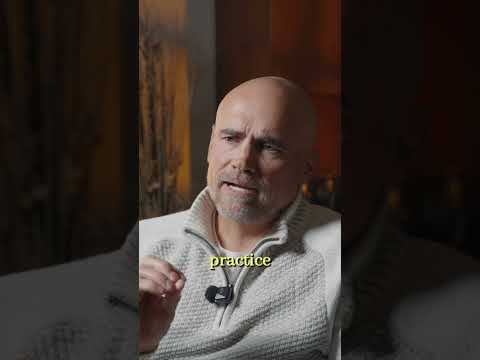
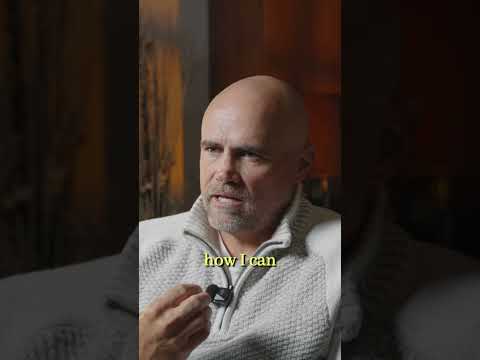
I'm John Koyle, AIF®. I work with families between roughly $500K and $25M in investable assets, navigating the decisions that don't get a second try: approaching retirement, inheriting wealth, optimizing a high income, or rebuilding a financial life after divorce or the loss of a spouse. Calm, tax-aware, coordinated with your CPA and attorney. No proprietary funds, no sales pressure, no products recommended for the commission.

John Koyle, AIF®, co-founder of Red Cedar Wealth Advisors
John Koyle, AIF® · Co-Founder, Red Cedar Wealth
AIF® · Accredited Investment Fiduciary 25+ years · Series 7 & 66 Custodied at Charles Schwab Clean FINRA record Verify on BrokerCheck ↗
My Approach

The Five Disciplines. One foundation.

Each discipline is present in every meeting. The proportions shift with the client and the moment. The integration is constant. Retirement sustainability, tax efficiency, wealth transfer, portfolio performance, risk management. The integration is where most of the actual value sits. Here's the essence of each.

01
Retirement Sustainability

Six beliefs that shape every plan.

Sequence risk often kills more plans than return assumptions do. The best Roth conversion year is usually the one you almost didn't do. The surviving spouse moves to single filing, same income, higher bracket, and that's a tax trap many plans ignore. Concentration builds wealth; diversification keeps it.

These aren't theories. They're the principles behind every plan I build, and they're why I spend as much time on what not to do as on what to do.

Read all six beliefs
02
Tax Efficiency

Alignment, not avoidance.

The tax code is a set of instructions Congress wrote to shape behavior. Aligning your life with those instructions is not aggressive planning. It's the planning. Roth conversion sequencing, capital gains compression on concentrated positions, charitable remainder trusts, Social Security timing, beneficiary coordination.

None of these are obscure. They're all legitimate, all written into the code intentionally, and all under-used. Most CPAs handle compliance, not strategy. The strategy work is mine.

See the core strategies
03
Wealth Transfer

Seventy percent of family wealth doesn't survive two generations. The reason isn't bad markets.

The cause is failure to communicate, outdated documents, and no plan for preparing heirs. Beneficiary designations regularly override well-crafted wills. Trust structures created a decade ago no longer match current law or current family. The portfolio that built the wealth isn't the structure that transfers it.

The work here is coordinating with your attorney to align documents, beneficiaries, gifting strategies, and trust funding with what you actually want to happen. I don't draft documents. I make sure the assets, the structures, and the intent all point the same direction.

See the transfer framework
04
Portfolio Performance

Four layers, one composite, zero ambiguity.

Every week, before any portfolio decision, I run through four layers of market health: economic conditions, market internals, valuations, and sentiment. Each one gets scored from +2 to −2. Those scores combine into a composite that maps directly to a portfolio posture, from aggressive on the positive end to defensive on the negative.

The work is in the scoring. Once the scoring is done, the positioning is already written. Which removes a dangerous thing in investing, which is making it up as you go.

Read the full methodology
05
Risk Management

The protection gap quietly kills more plans than markets do.

A $5M net worth with a $1M umbrella policy is meaningfully underinsured. One lawsuit from a car accident or rental incident can threaten thirty years of work. Long-term care is more acute: average nursing home stays cost over $100,000 a year, and a multi-year event for one spouse can consume what was meant for the survivor.

Most advisors relegate risk to a footnote because insurance conversations are uncomfortable. The math doesn't care. Coverage adequacy, umbrella sizing, long-term care planning, and life insurance structure sit alongside the portfolio in any complete plan. I review them with the same rigor I bring to allocation.

Read the risk framework
Who I Serve

Households at an inflection point.

I specialize in the financial transitions that matter most. Four situations that show up often in the practice. Your life probably doesn't fit cleanly into one of them. Most don't. These are meant as a starting point, not a filter.

01 · Pre-Retirees & Retirees

Thirty years of accumulating. Thirty more of distributing.

The advice that got you here won't get you through what's next. Sequence risk, Roth conversions, Social Security timing, RMDs, survivor planning.

Learn more →
02 · Inheritors

Wealth you didn't build still has to be managed well.

First-time experience with wealth at this scale. The pressure to "get it deployed" rarely comes from you. Education first, plan second.

Learn more →
03 · High Earners

A high income doesn't plan itself. It just gets taxed.

Physicians, executives, attorneys, founders. The standard playbook was designed for middle-income households. Once you're past the phase-outs, the next layer starts.

Learn more →
04 · Solo Again

The financial life you shared is suddenly yours alone.

Divorce or loss of a spouse. Different paths, same core challenge: the person who wasn't running the money is now running it. I teach the pieces slowly, in plain English, as many times as it takes.

Learn more →
About

The short version of a long career.

I finished school in 2001 with a finance degree and got licensed the same year. My timing was accidentally educational. The dot-com bubble was mid-unraveling, the industry was in crisis, and my first year in the business was spent watching investors learn hard lessons about risks they'd been told didn't exist. I spent my first decade at a regional broker-dealer before co-founding Red Cedar Wealth Advisors because I wanted to do this work differently.

I wanted to build a practice where the work was visible. An explicit process. Meaningful check-ins rather than perfunctory ones. Plans that account for what's actually in front of a client, not a generic age-based allocation. That's what I set out to build, and it's still what I'm refining today.

I work with clients all over the country, mostly over video. Geography stopped being a real constraint in this business a decade ago. What matters more is the judgment, the process, and the willingness to think independently when the industry's consensus is drifting somewhere questionable. That's what I try to bring to every relationship.

Read the full story

Library

Long-form on what actually matters.

Not blog posts. Not recycled market commentary. Real research on the planning problems my clients actually face.

Browse the full library
PUBLIC TOOL

Run your own numbers before the conversation.

I built a public version of the retirement planning tool my clients see. Plug in your assumptions and stress-test your plan against sequence-of-returns risk, tax impact, Social Security timing, and current valuations. No email required to use it.

Open the calculator
Let's talk

The clients I work with have worked too hard to leave this to someone who's winging it.

If you've been looking for an advisor with a real process and a real point of view, I'd like to meet you. A first call runs 30 minutes, costs nothing, and has exactly zero pressure.

§